

AI Transformation Roadmap Tools: What to Use in 2026
Introduction
As we approach 2026, AI transformation has evolved from experimental initiatives to core business imperatives. Adopting AI is not just about implementing advanced technology; it is about driving business growth, efficiency, and innovation. The key to successful adoption is having a well-structured roadmap supported by the right AI transformation tools in 2026. This roadmap serves as a strategic guide, aligning AI initiatives with organizational objectives while minimizing risks and maximizing return on investment.
Aligning AI with Business Goals
Before selecting tools, it is essential to understand where AI can add the most value. Not every process requires AI, and prioritization is critical. Organizations should focus on outcomes such as revenue growth, cost savings, improved operational efficiency, and innovation.
High-impact AI opportunities often include predictive analytics for decision-making, automation of repetitive processes, intelligent customer insights, and AI-driven product innovation. Tools that help identify and prioritize these opportunities, such as strategic planning platforms like Miro, Lucidchart, or AI-focused roadmap software, enable organizations to align AI initiatives with measurable business objectives.
Assessing Current State
Understanding the current state of data, infrastructure, and talent is critical. AI cannot deliver value if foundational elements are weak. Data assessment tools like DataRobot MLOps, Databricks, and cloud-native AI readiness platforms from AWS or Azure help organizations evaluate data quality, availability, and compliance readiness.
Simultaneously, assessing organizational readiness, including staff skills, technology adoption culture, and process maturity, is essential. This step ensures AI projects are realistic and tailored to existing capabilities, minimizing risk while building a strong foundation for success.
Recommended AI Transformation Tools
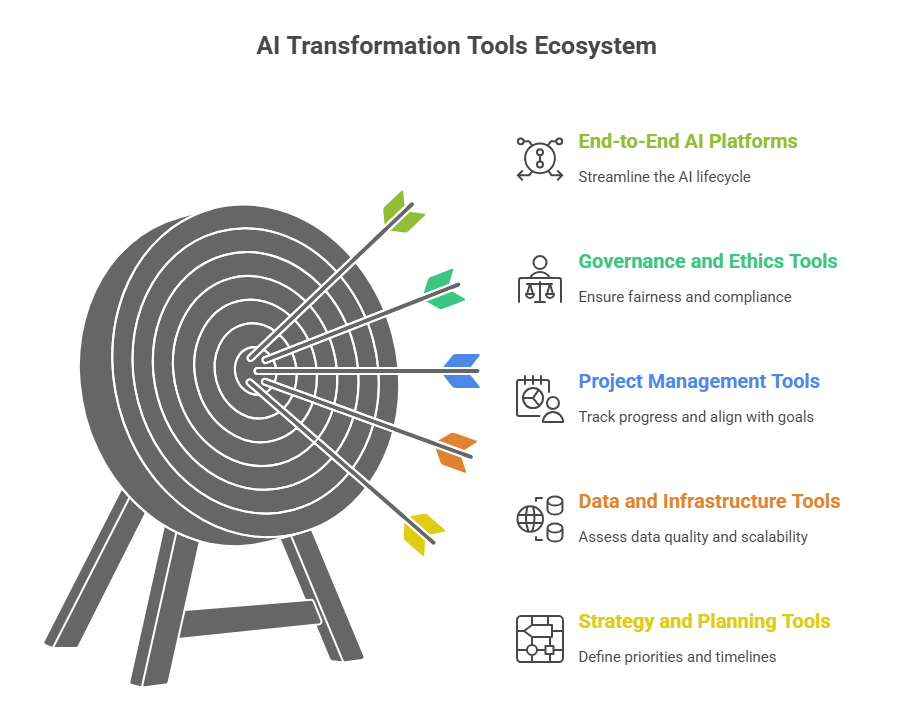
AI transformation requires a mix of AI transformation tools designed for strategy, implementation, and governance.
- Strategy and Planning Tools: Platforms or visual workflow tools provide clarity and collaboration, helping define priorities, timelines, and milestones.
- Data and Infrastructure Tools: Solutions like DataRobot or Databricks assess data quality and infrastructure gaps, preparing scalable AI systems.
- Project Management and Tracking Tools: Platforms such as Jira with AI plugins or Monday.com allow tracking of AI projects, monitoring KPIs, and ensuring alignment with business goals.
- Governance and Ethics Tools: Solutions like Fiddler AI or Truera provide explainability, fairness, and compliance monitoring, which are essential in today’s regulatory landscape.
- End-to-End AI Platforms: Integrated platforms like Microsoft Azure AI, Google Vertex AI, and IBM Watson Studio streamline the AI lifecycle from planning to deployment and monitoring, making scaling more efficient.
Also Read : AI Proof of Concept Explained: Meaning, Key Steps, Benefits & Real-World Examples
Step-by-Step AI Transformation Roadmap
A clear roadmap breaks AI adoption into manageable phases:
- Opportunity Identification: Identify high-value AI use cases across the organization that align with strategic objectives, business goals, and measurable performance outcomes.
- Data Preparation and Infrastructure Readiness: Ensure organizational data quality, accessibility, and infrastructure scalability are sufficient to support AI implementation and long-term technology adoption effectively.
- Pilot Projects and Proof of Concept: Deploy small-scale pilot projects or proof of concept initiatives to validate AI solutions, measure business impact, and reduce implementation risk.
- Scaling AI Across the Organization: Expand successful AI initiatives across multiple departments, business units, and geographies to achieve enterprise-wide operational efficiency and measurable outcomes.
- Continuous Optimization and Innovation: Regularly monitor AI performance, refine models based on results, and innovate processes to maintain a competitive advantage and maximize ROI consistently.
Presenting this roadmap visually enhances understanding and drives confidence in decision-making.
Also Read : Key AI Models and Algorithms Every Business Should Know in 2026
Conclusion
AI transformation is no longer optional. With the right AI transformation tools 2026 and roadmap, organizations can unlock efficiency, innovation, and competitive advantage. Strategic alignment, measurable impact, and risk-managed implementation ensure AI initiatives deliver real business value in 2026.
Amplework’s AI consulting services guide organizations through every stage of transformation. From designing roadmaps to selecting tools and scaling AI solutions, they help ensure successful adoption and long-term, measurable business results.
 sales@amplework.com
 (+91) 9636-962-228