
NLP Solutions for Small Businesses: Affordable & High-Impact Use Cases
Introduction
Small businesses today face intense pressure to compete and innovate with limited resources. Artificial Intelligence, particularly Natural Language Processing (NLP), offers a unique opportunity to improve efficiency, enhance customer experiences, and generate actionable insights. Strategic adoption of NLP solutions for small businesses enables organizations to leverage AI’s capabilities without overextending resources.
This blog explores affordable solutions, high-impact use cases, implementation strategies, and actionable ways to overcome common challenges.
Understanding NLP for Small Businesses
NLP helps businesses make sense of text data, automate routine tasks, and improve decision-making. Small businesses don’t need to build AI from scratch; they can use affordable and scalable NLP solutions that deliver real impact. Focusing on solutions that align with business goals ensures these tools drive tangible results and support growth, rather than just adding technical complexity.
Affordable NLP Solutions Available
Open-source NLP tools: Platforms like Hugging Face, spaCy, and NLTK provide enterprise-grade capabilities at no licensing cost. Implementation requires technical expertise but removes ongoing subscription fees. Best for businesses with internal development resources.
Cloud-based NLP solutions for small businesses: Google Cloud Natural Language, AWS Comprehend, and Microsoft Azure Cognitive Services offer pay-as-you-go pricing. They require no infrastructure setup, can be implemented in days, and scale automatically with usage. Ideal for businesses needing quick results without building a technical team.
The decision is straightforward: If technical resources are available internally, use open-source. If speed and quick deployment are priorities, choose cloud-based services to implement scalable enterprise AI solutions.
High-Impact NLP Use Cases
Key high-impact use cases for small businesses include:
1. Customer Support Automation
Deploy conversational AI handling routine inquiries, password resets, order status, FAQs, and policy questions. Route complex issues to humans with full conversation context.
Measurable impact: 50-70% ticket volume reduction. A business processing 150 daily tickets drops to 45-60 requiring human attention. At 15 minutes per ticket, that’s 22+ hours daily reclaimed, nearly three full-time positions reallocated to revenue-generating activities.
2. Sentiment Analysis for Marketing Insights
Aggregate feedback from reviews, surveys, social media, and support interactions. Identify satisfaction trends, recurring complaints, feature requests, and competitive intelligence automatically.
Measurable impact: Product roadmap decisions informed by actual customer language patterns rather than intuition. Marketing messages tested against real sentiment data. Churn risks are identified weeks before customers leave, enabling proactive retention.
3. Sales and Lead Generation Improvements
Analyze inquiry language to score leads by buying intent and urgency. Extract requirements and budget signals from initial conversations. Prioritize follow-up based on conversion probability rather than arbitrary criteria.
Measurable impact: Sales teams focus exclusively on qualified opportunities. Conversion rates improve 30-40% while sales cycles compress as reps engage with complete context from first contact.
4. Internal Process Optimization
Extract key terms, dates, and obligations from contracts automatically. Classify and route internal communications. Summarize meeting notes and generate action items. Flag compliance risks in documentation.
Measurable impact: Administrative overhead drops 40-60%. A five-person team reclaims 10-15 hours weekly previously spent on document processing and information management.
Implementation Strategies for Small Businesses
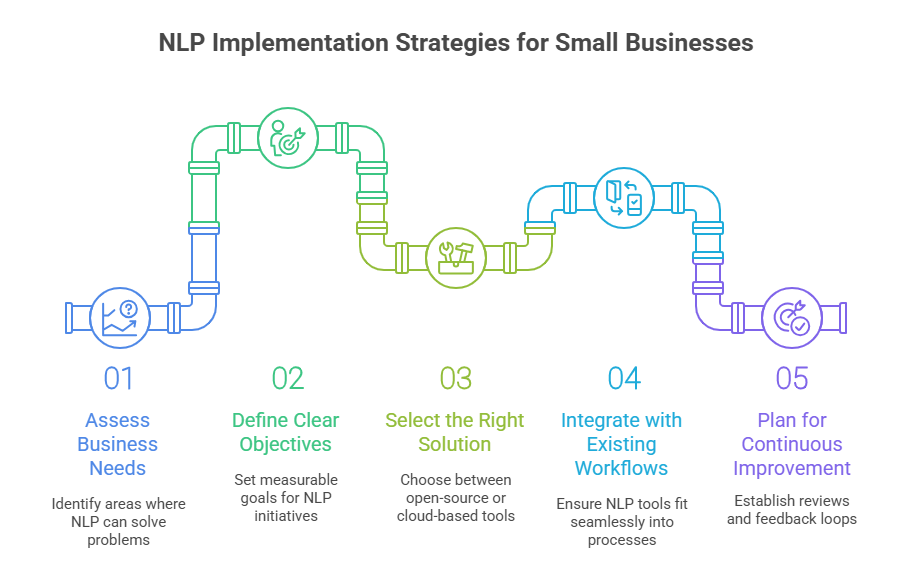
Successful NLP adoption requires a structured approach focused on measurable business outcomes and strategic impact. Here are key strategies:
1. Assess Business Needs
Identify areas where NLP can solve real problems or create efficiency. Prioritize use cases that directly impact revenue, customer experience, or operational productivity.
2. Define Clear Objectives
Set measurable goals for each NLP initiative, including KPIs for performance, accuracy, and business outcomes. This ensures success can be tracked and evaluated.
3. Select the Right Solution
Choose between open-source tools for flexibility or cloud-based platforms for rapid deployment and scalability. Align the solution with your team’s capabilities and resources.
4. Integrate with Existing Workflows
Ensure NLP tools fit seamlessly into current processes and systems. Leveraging AI integration services can prevent disruptions, streamline adoption, and maximize value from day one.
5. Plan for Continuous Improvement
Establish regular reviews, performance monitoring, and feedback loops. Continuously refine NLP models and processes to maintain relevance and effectiveness.
Also Read : Enterprise NLP Solutions: How Large Companies Scale Text Automation
Challenges and How to Overcome Them
- Data Limitations and Quality Issues: Small businesses often have limited or inconsistent data. Use pre-trained NLP models that work with minimal data, and gradually improve accuracy as more data becomes available.
- Talent and Expertise Gaps: Teams may lack AI skills. Partner with experienced providers or use cloud-based NLP platforms that require minimal technical expertise to implement and manage.
- Integration with Existing Systems: NLP tools may not fit seamlessly with current workflows. Plan integration carefully, using compatible platforms or APIs to ensure smooth operation without disrupting processes.
- Maintaining Relevance and Updates: Models can become outdated. Set up regular reviews and updates to ensure NLP tools continue to deliver accurate, actionable insights aligned with business needs.
Conclusion
NLP solutions for small businesses are more than a technical tool; they drive growth. Affordable NLP solutions, applied thoughtfully, can automate processes, optimize operations, and generate actionable insights. Leveraging a leading expert like Amplework helps businesses unlock AI’s full potential, turning investment into operational efficiency, improved customer experience, and sustainable growth.
 sales@amplework.com
 (+91) 9636-962-228